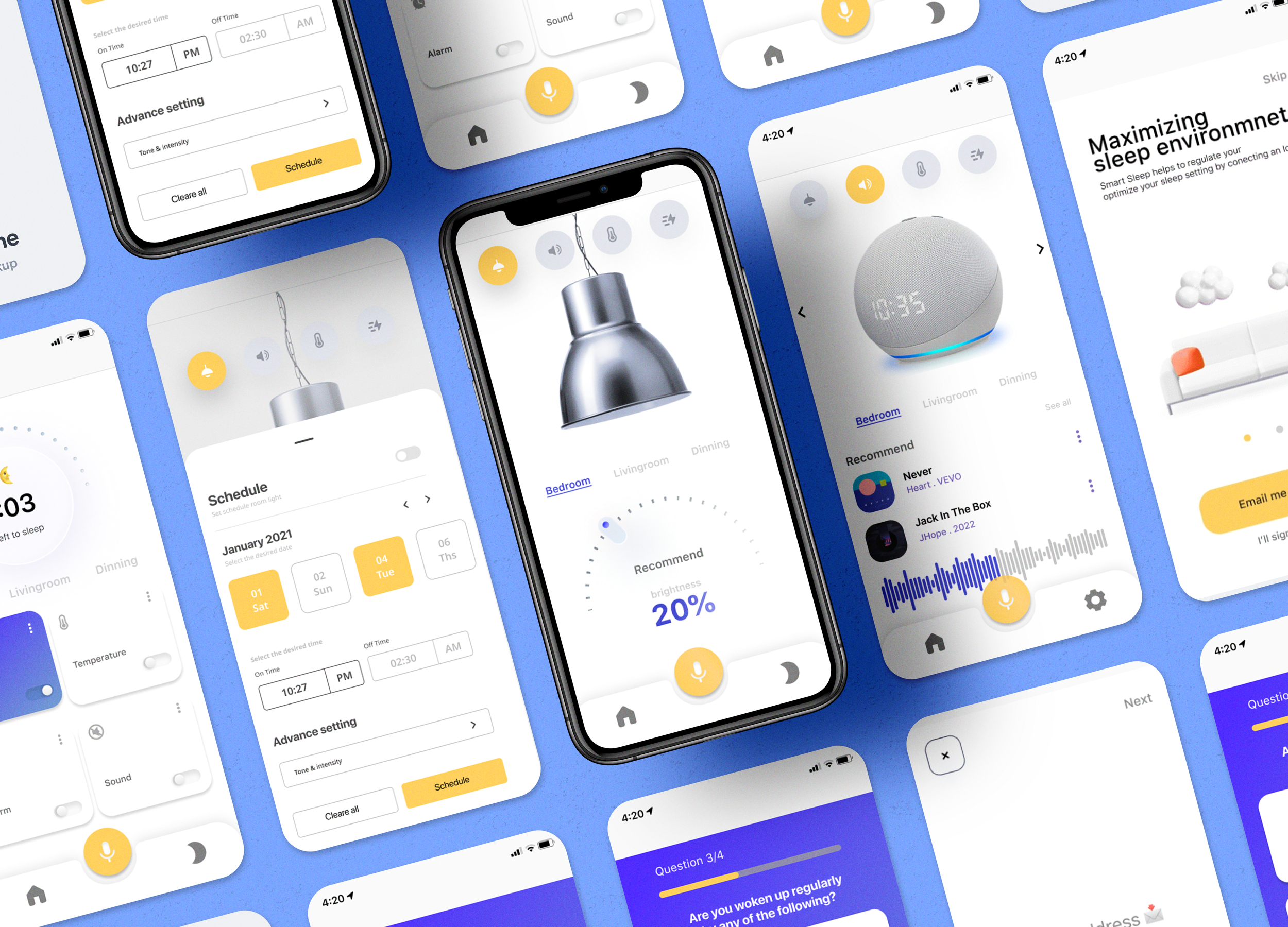
Smart Sleep
Problem Space
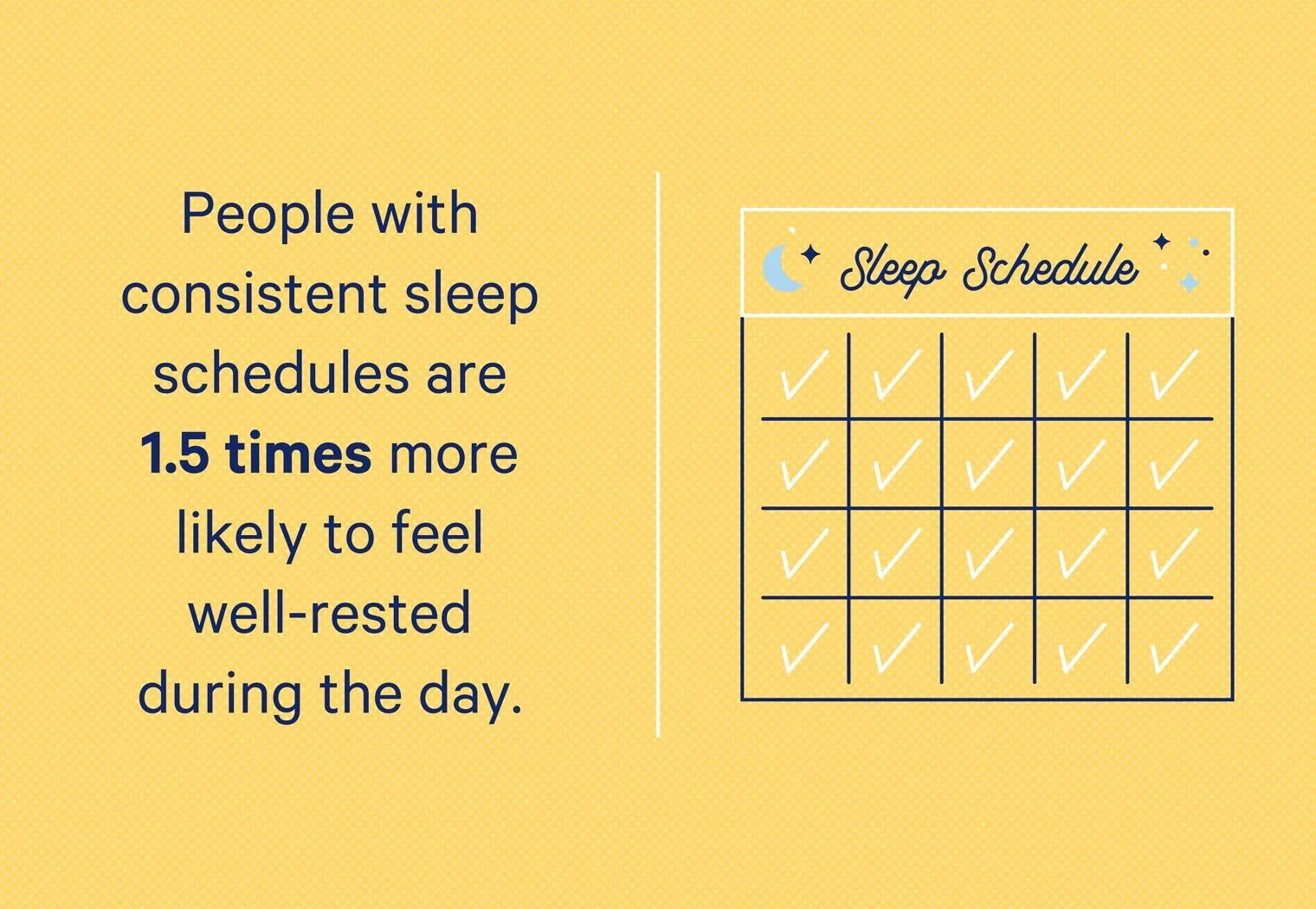
(1) Since the beginning of the pandemic people reported inconsistent sleep schedules
(2) People value an optimal bedroom environment, but fail actual create a perfect bedroom setting fit for sleep.
Project Goal
Provide guidance on the optimal sleep environment and consistent sleep patterns
My role : UX/UI Designer
I used human-centered methodologies to perform qualitative and quantitative field research studying those with insomnia as a result of inconsistent sleep schedules. After countless user interviews, I created an IoT sleep aid app solution throughout many cycles of wireframes, prototypes, service blue print and feedbacks from the group, my peers and advisors.
Process
Define problem - White paper and desktop research - Quantitative and qualitative user research - Ideate - Design & Iterate - Reflect
Tools
Figma
Google Forms
Miro
Duration
2021. 01 - 04
Advisor
Amit Kalra
CHALLENGE
Problems with our sleep pattern during the pandemic.
During the pandemic, sleep problems appeared common. I’ve noticed how many of my peers had difficulty sleeping and had various causes of sleep deprivation. Some found it difficult to fall asleep, while others find they wake up more during the night. Improving sleep is essential for our well-being and energy levels. We recognize that sleep hygiene (Bedroom environment and sleep rituals) plays a huge role in addressing sleep insufficiency. Yet, we still fail to make a consistent sleep routine and set a perfect bedroom.
This sparked the question- How might we optimize the sleep environment and make a consistent sleep routine?
PROJECT SCOPE & HYPOTHESIS
I will know my product would be successful if I achieve the following;
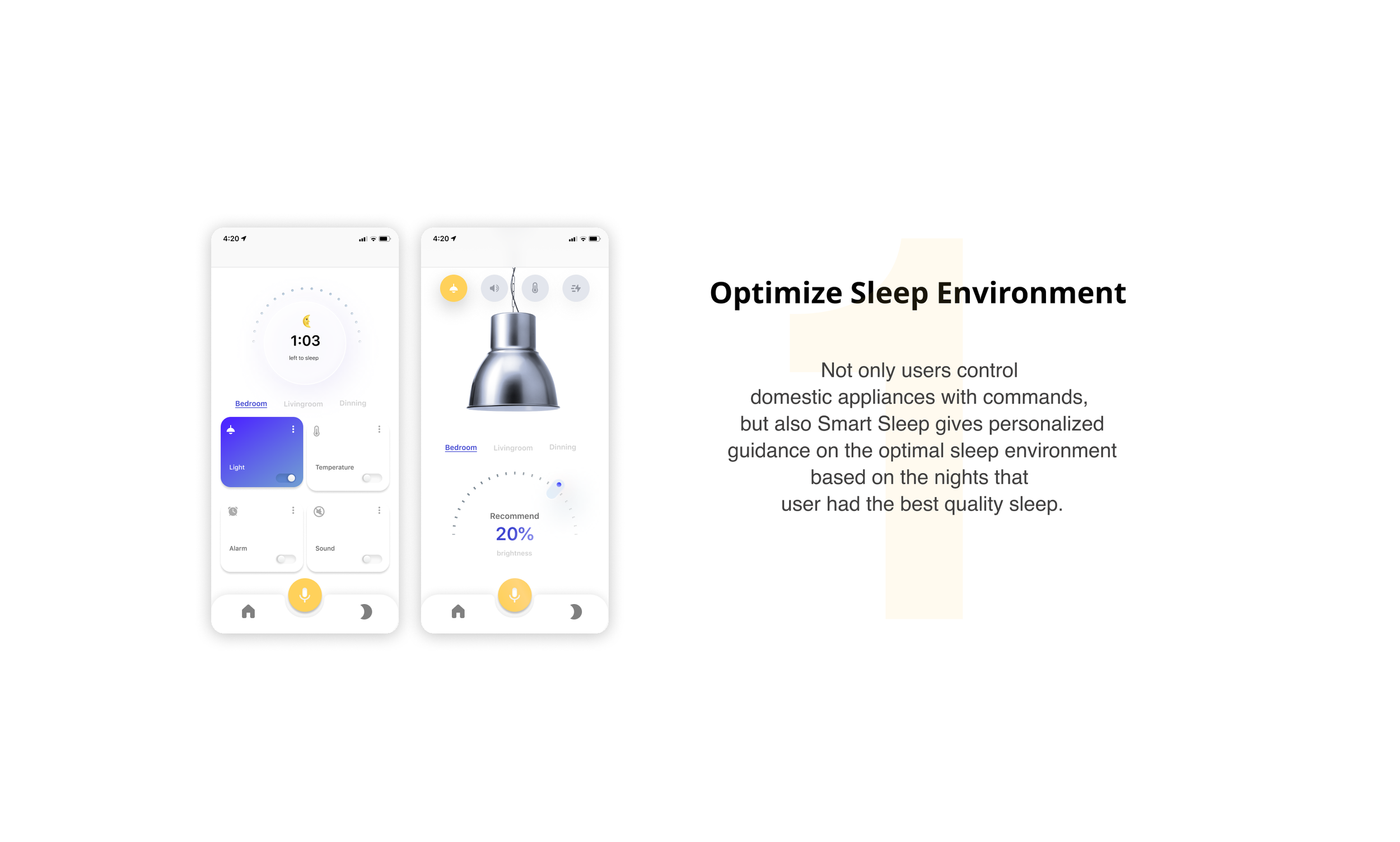
1. Provide guidance on the optimal sleep environment.
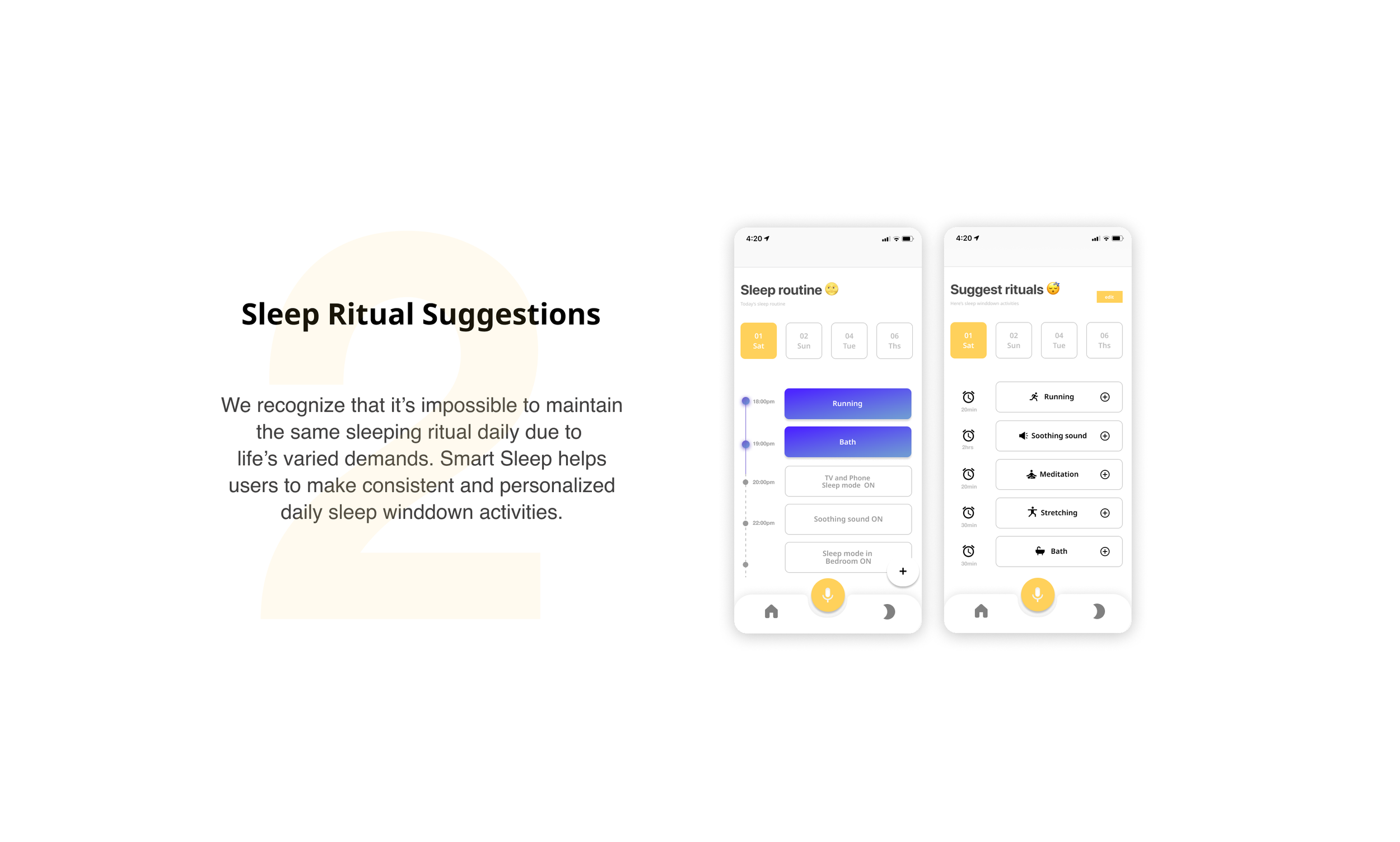
2. Make sleep routine fun and customizable.
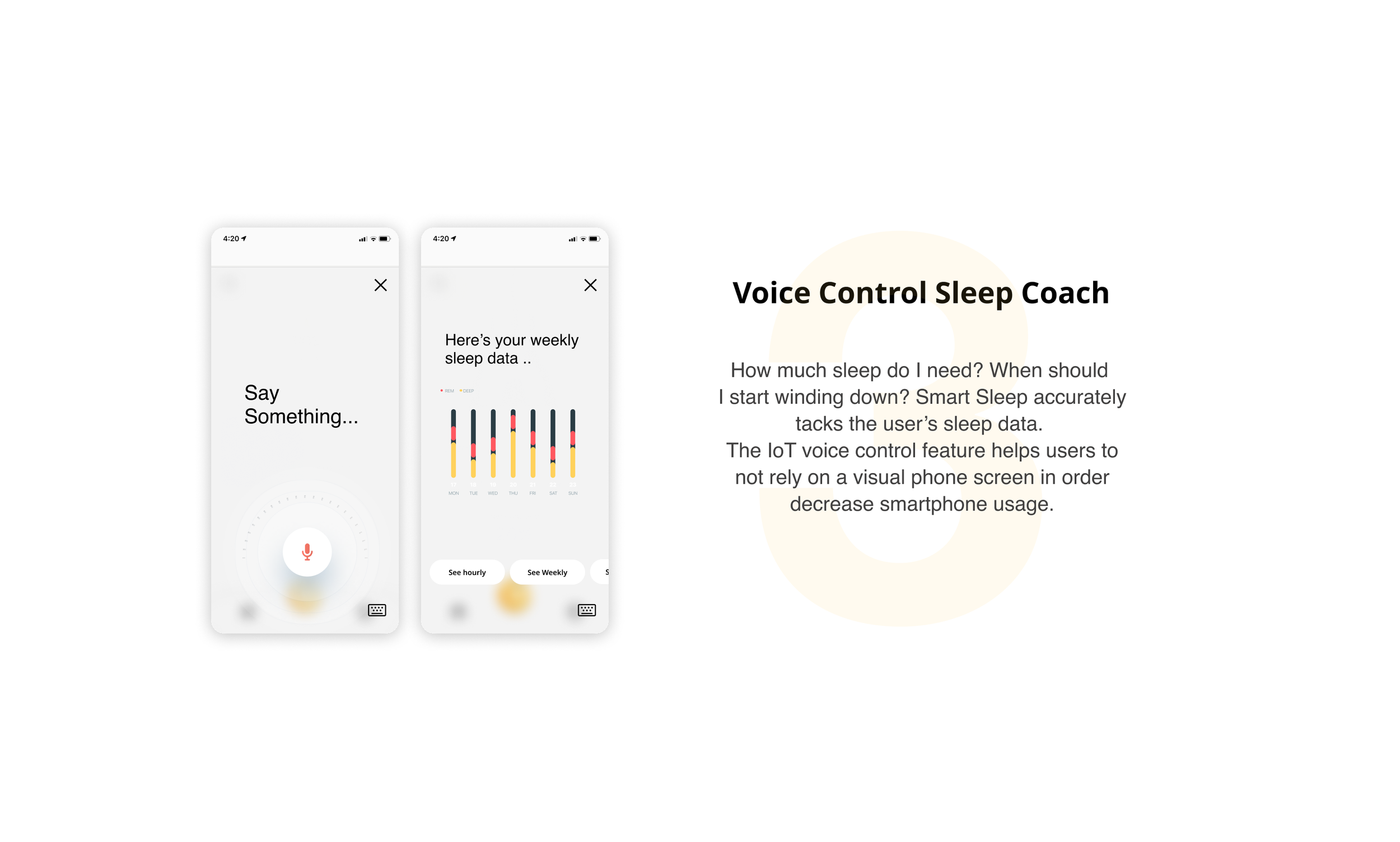
3. Make people rely less on their smartphones before bedtime.
SOLUTION
WHITE PAPER RESEARCH
Importance of a Relaxing Bedroom and Sleep Hygiene.
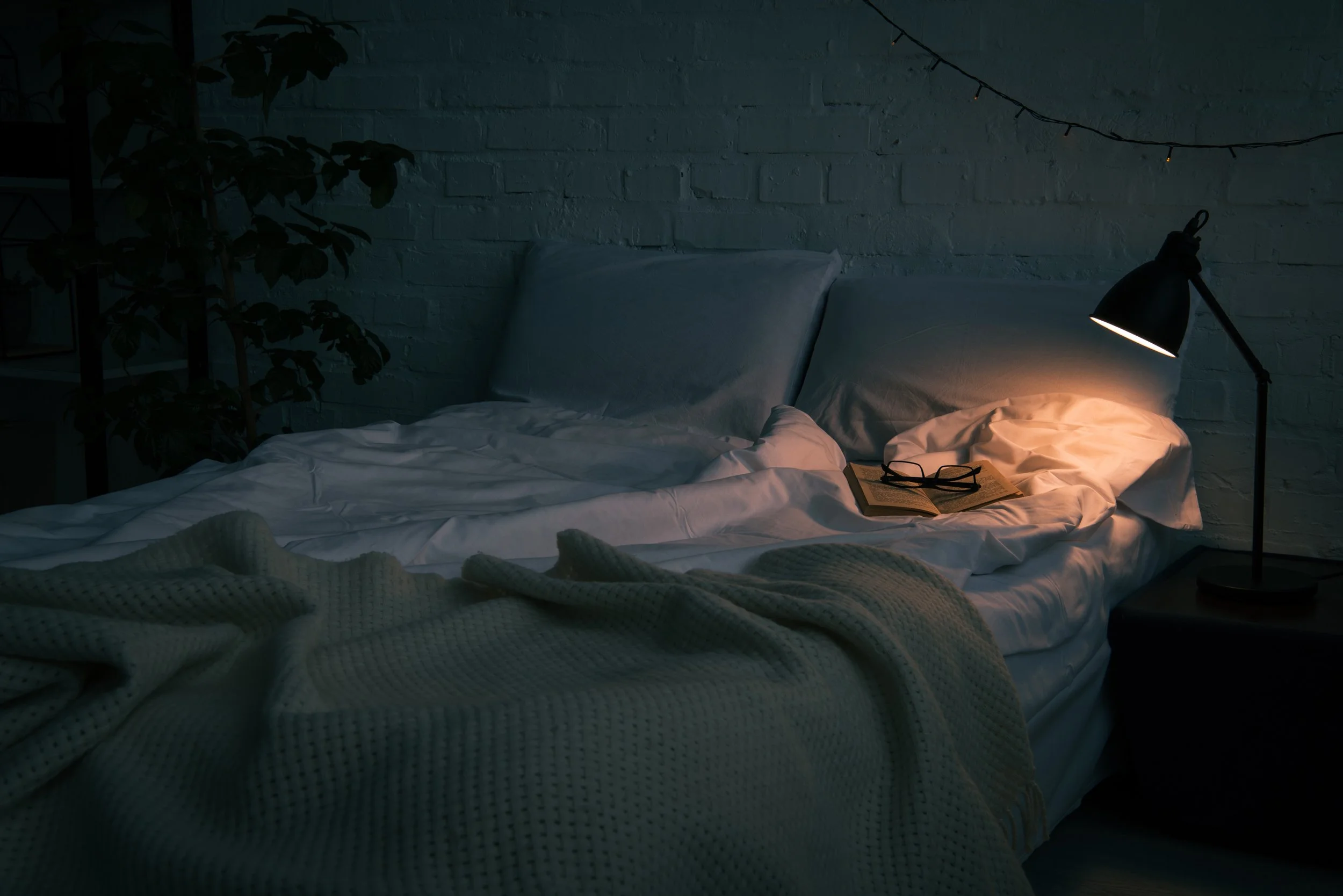
We're all spending more time at home during the coronavirus pandemic. That makes us understand how important it is to give value to each room and make it as relaxing and comfortable as possible. I found multiple articles about how optimizing sleep hygiene can play an important role in addressing sleep insufficiency.
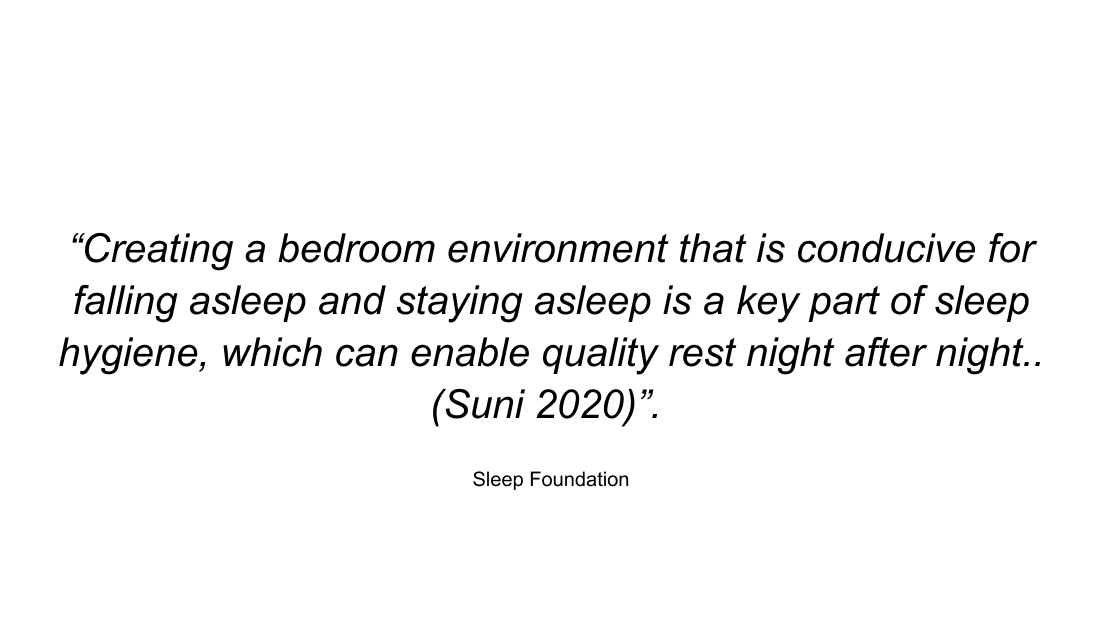
Starting with white paper research, I began to draw from research articles on the topic of sleep, sleep environment, sleep rituals. I stumbled upon an eye-opening article from the Sleep Foundation about the Importance of good sleep hygiene and bedroom environment.
DESKTOP RESEARCH
COVID-somnia?
A study found patients with COVID reported more trouble sleeping compared to patients without COVID. We agree that our routine and habits have been disrupted after the pandemic hit. As we spend more time at home, we are less likely to be exposed to sunlight and this disrupts our sleep cycle. Also, since the pandemic, we are seeing increased screen time and research shows that increased screen time is related to decreased sleep time.
An article explored the effect of good bedtime routines as being essential to building a consistent sleep schedule. Bedtime routine will help to reduce late-night stress and anxiety. — the kind of worrisome thoughts that keep you up at night.
COMPETITIVE RESEARCH
The competition had no customized sleep setting and ritual features.
To explore how competitors help users to maintain sleep schedule and offer positive impact on sleep hygiene, I went back to the drawing board and researched three things:
1) what existing data say and 2) what products are already on the market to help with sleep 3) Do users satisfied with the aid features?
I found almost none of them had aspect of customized sleep environment. This became my opportunity for the solution.
QUANTITATIVE RESEARCH
After looking at the market, it was time to gather potential user’s information. A survey was conducted on 25 participants in varying age grups from 18-24 to 55-64, almost half of whom were in the 18-24 group. 80% respondnets based in NYC; rest in the West Coast & Midwestern US and Seoul, Korea.
In this phase, I didn’t just look at people who have insomnia, I also took a broad view to survey people who have a desire to have a better nights sleep.
The purpose of the online survey is to know how they value their bedroom environment and sleep routine and whether they have sleep routines.
FROM THE SURVEY I ACHIEVED..
QUALITATIVE RESEARCH
What causes poor sleeping and coping skills?
Next, I wanted to listen to people who are suffer from Insomnia. I gathered five participants who suffer from insomnia from inconsistent sleep schedules. I gathered qualitative data then organized it through affinity mapping. Mainly, I focused on the causes of poor sleep and their coping mechanisms.
To gather their sleep stories, I asked several questions
1. What does quality sleep mean to you?
2. What are your bad habits that affect your sleep?
3. What do you do when you can’t sleep?
4. What external factors disturb your sleep?

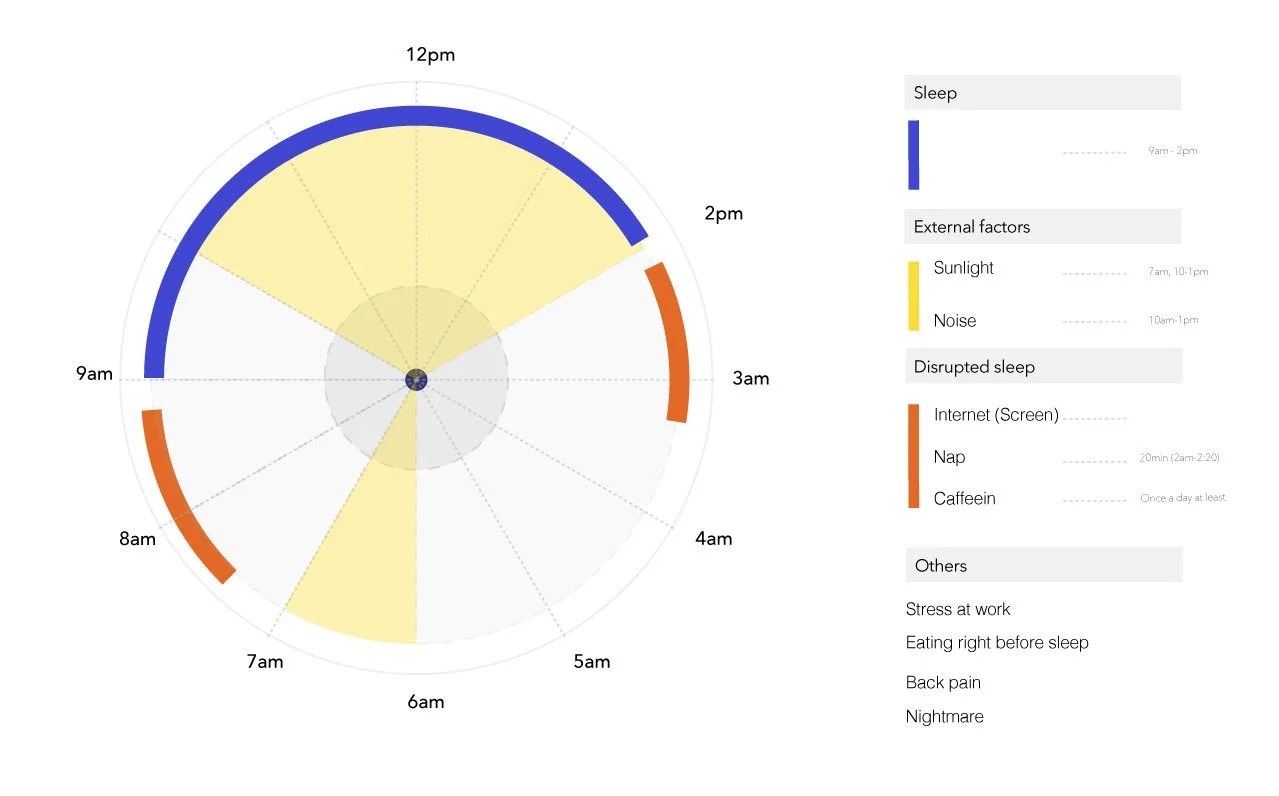
LUCY’S SLEEP JOURNEY MAP
I also visualized Lucy’s path in a sleep journey map to step in to her shoes and to know better about real causes of insomnia
I’ve noticed how she has various internal (Stress) and external (Sunlight and Noise..) causes of sleep deprivation.
PERSONA
Meet Lucy- she’s a medical student and had insomnia. Due to nightshifts, she has an inconsistent sleep schedule. After nightshifts, she finds it very hard to fall asleep when the sun is up, so she bought a blackout curtain to sleep in the complete dark. She has various methods to overcome insomnia such as avoiding late night snacking and cooling down her mind by listening to soothing music and podcasts. But, she still ended up failing to find a best solution.
Lucy's sleep journey map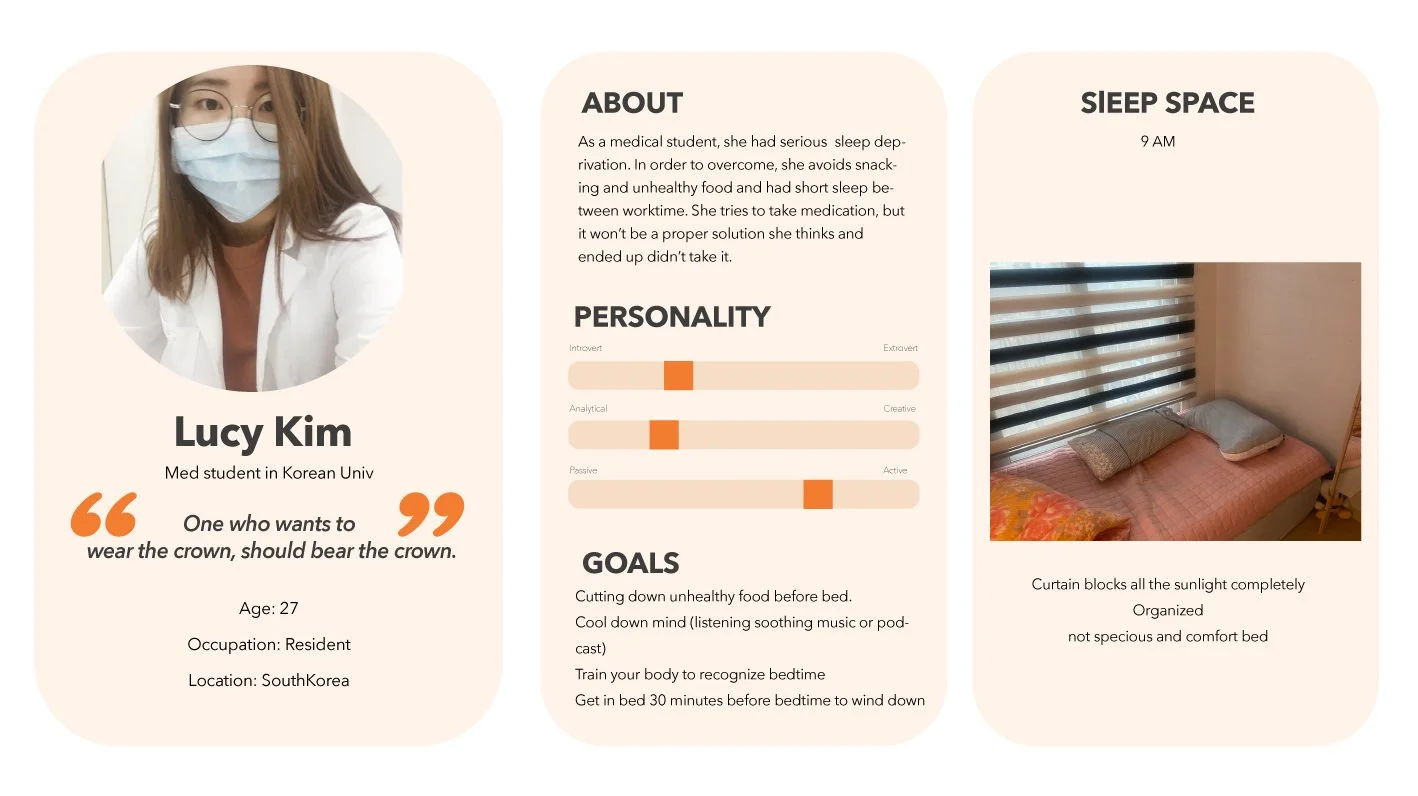
Lucy’s Persona AFFINITY DIAGRAM
“I wish my sleep routines are fun’’
One of the interesting responses is they all have different sleep practices (rituals). Some of them do stretching and others are listening to podcasts to wind-down and sleep.
I also asked to gather other interviewees’ bedroom photographs while asking about their ideal bedroom environment. This practice gives me additional insight. Some people prefer completely mute settings, while others prefer ambient white noise throughout sleep. They stated that they believe the bedroom environment affects sleep but don’t know what a perfect bedroom environment is.
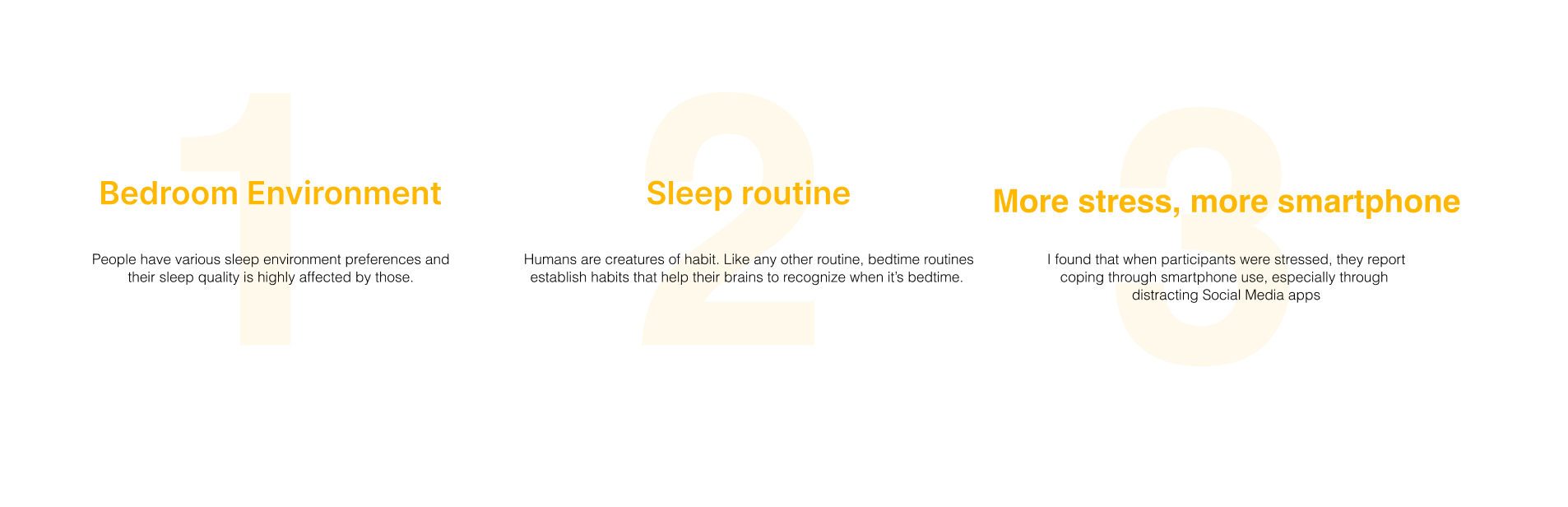
KEY INSIGHTS
Bedroom setting and sleep rituals highly affects interviewee’s sleep
After conducting countless user interviews, I found they have varied sleep routines and environments and want to find improvement in their sleep hygiene. And I found interviewee explained the causes of insomnia are mostly stress for various reasons. Thus, optimizing environmental factors should be an effective solution instead of focusing on an individual’s stress solution. To discover opportunities, I divided insights into three following categories.
IDEATION
I now had synthesized interview data, a problem statement and a questions to answer, so I headed into a ideation stage. In the ideation phase, I worked with my peers in the User Experience studio class to begin the ideation process in order to get all of our thoughts out on to paper.
INITIAL USER-FLOW
I mapped out User Flow to finalize how Lucy would access each feature on the app, as seen below:
With the flow in mind, I roughly sketched low-fi screens to outline how the features would appear within the app. I held a discussion with Lucy to decide where and how to implement the features which acted as a guide for the low-fi wireframes:
FROM THE USER-FLOW TESTING I ACHIEVED..
-
After some discussion, she pointed out that “Edit” in the Sleep routine feature may not have been clear enough and could cause confusion. "Edit" is supposed to be a function to add and see suggestions about new sleep rituals. So, I amended the function to + Icon to be look intuitive.
-
During the discussion, she was critical of the voice feature for reducing smartphone usage. She thinks even if she likes the voice control feature, she would still use my smartphone until late at night. During my study, I found smartphone usage highly affects sleep quality. So, I need to ideate aggressive ways to reduce smartphone usage.
I came up with a smartphone sleep mode idea that doesn’t allow users to use certain apps during a specific time that users already set. (But, I ended up didn’t use this idea because there is same feature called Downtime on IPhone feature.)
SERVICE BLUE PRINT
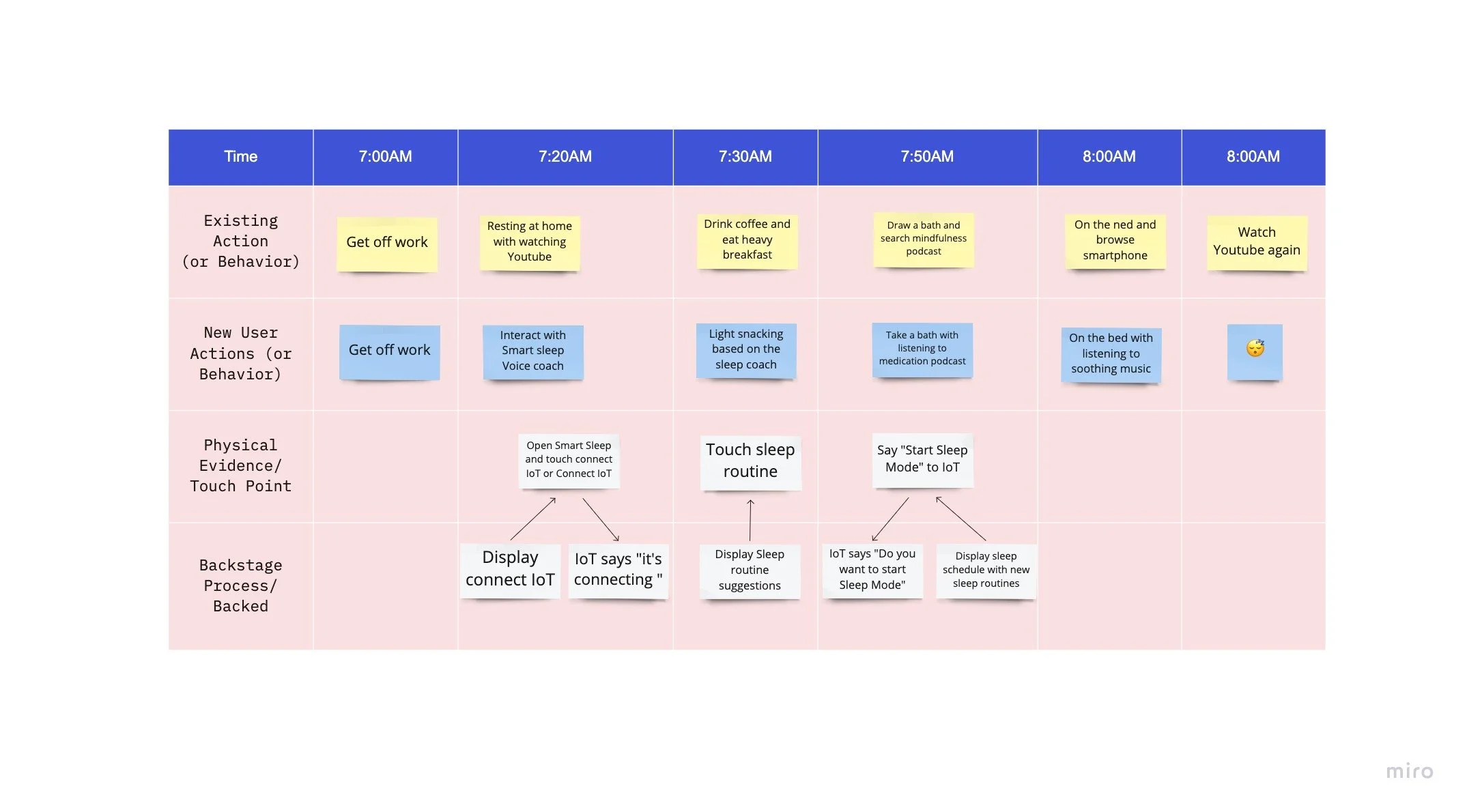
After receiving the feedback, I visualize how Lucy will interact with Smart Sleep to achieve her goal through the service blueprint. This process helps me to create a clear picture of the Smart Sleep process for potential users like Lucy, who has insomnia from the inconsistent sleep schedule.
TESTING + IMPROVEMENTS
Iterative in my design
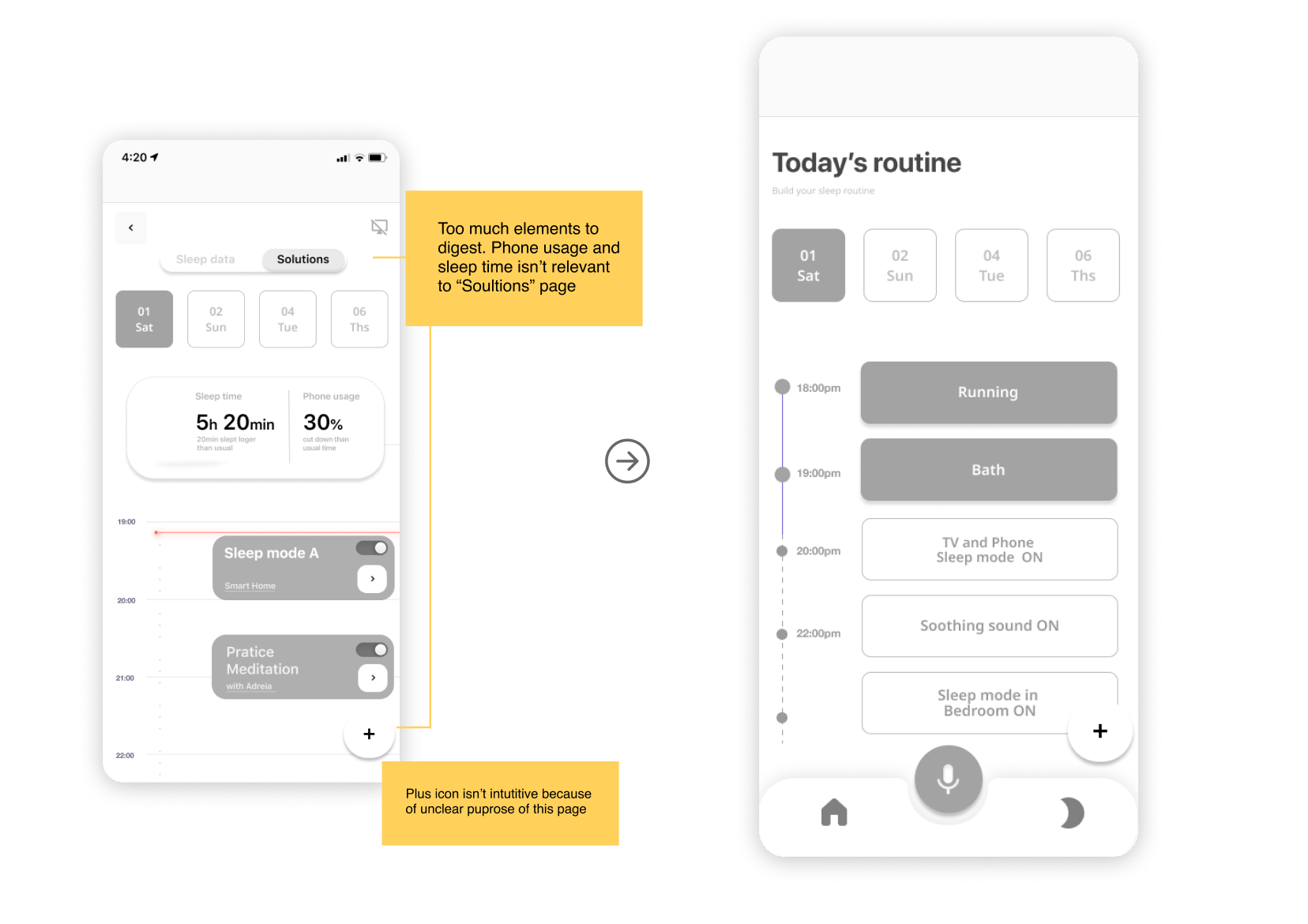
I continually iterated my design over the span of 2 weeks- with 3 major improvements based on various feedback from 3 other peers + Instructor’s feedback.
1.Increase Visibility of system status
Based on the peer feedbacks, too many signifiers and information confusing for them to know what's the page about immediately.
Remove Sleep time and Phone usage sections that disrupts user’s cognitive load.
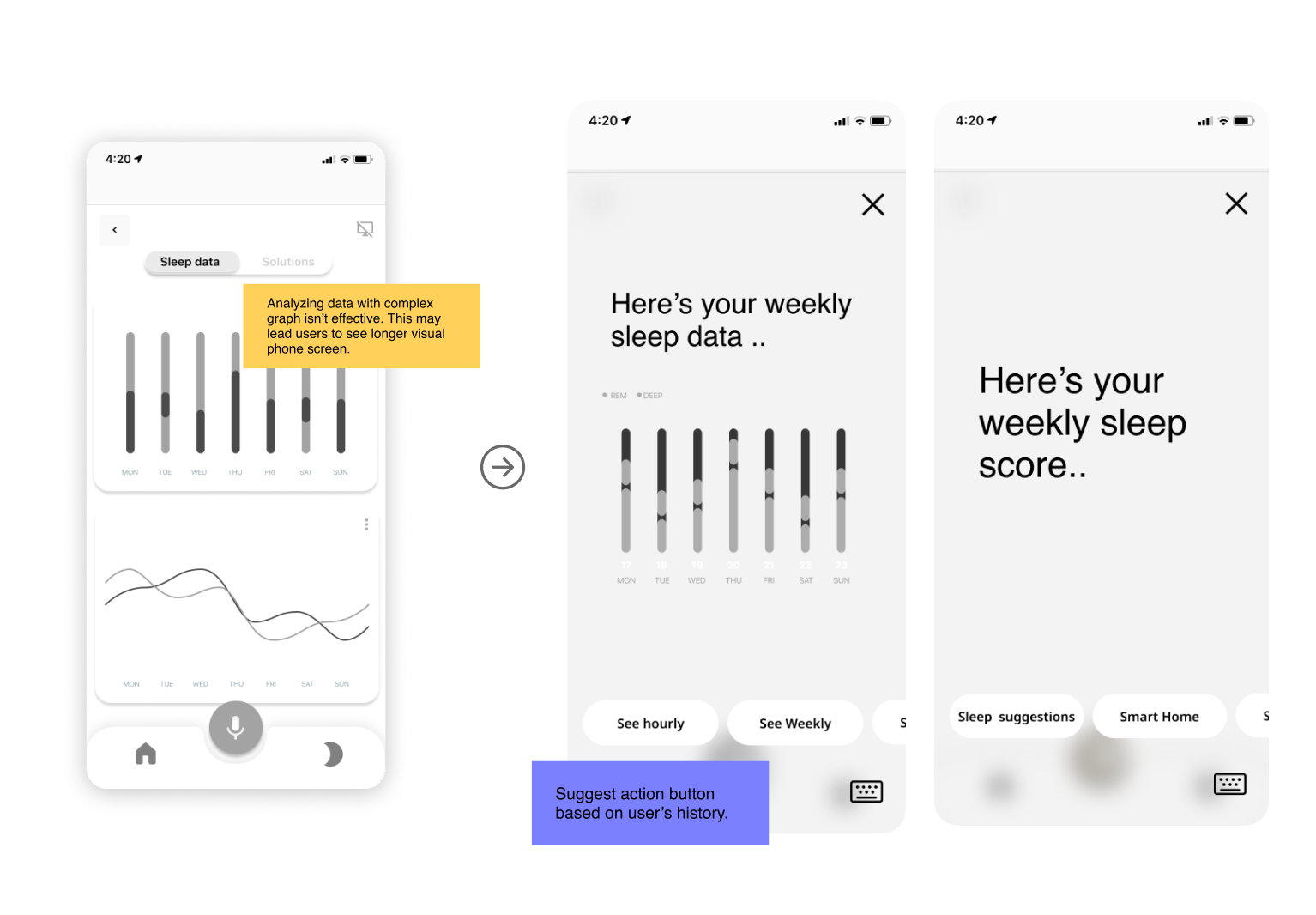
2. Voice Control
Sleep data page isn’t intuitive to understand. Tracking sleep data feature is already existing in market.
Incorporate tracking sleep data into voice control.
Upon feedbacks, Voice control should be a central feature.
Suggest action button helps users to keep engage with voice control feature
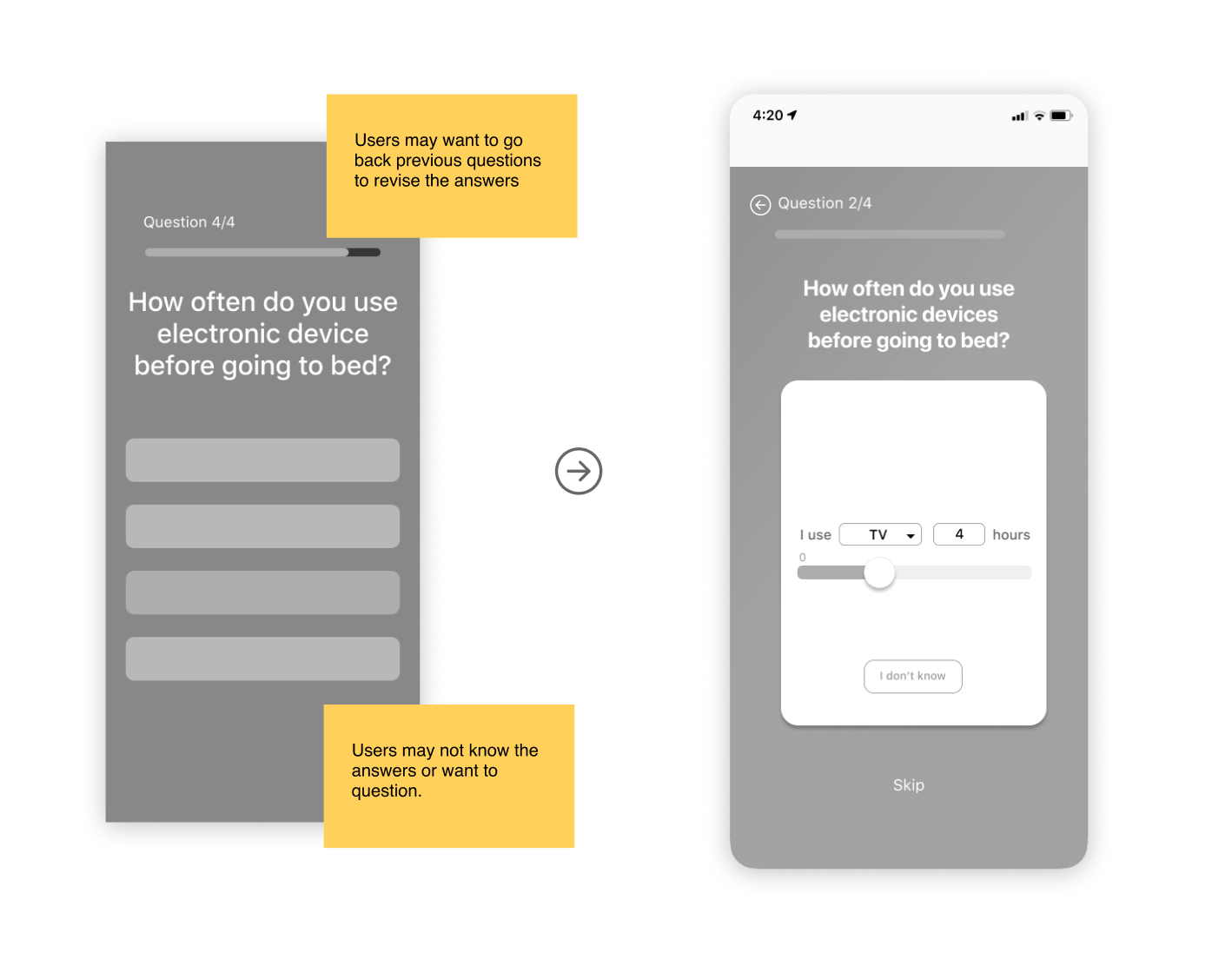
3. User control and freedom
“Users often perform actions by mistake. They need a clearly marked emergency exit to leave the unwanted action without having to go through an extended process ( Nielsen 1994)”.
Adding an “I don’t know” button and “skip” button allows users to control the system.
THE STYLE GUIDE
Futuristic, comfortable, appealing & mindful
I created some mood boards, mood boards containing images, structures, patterns fonts, and icons to represent the mood of our brand attributes. Designing the mood board was followed by creating a survey to find out which of them worked best for future users. Upon the result, I created the style guide. I also keep in mind following ADA compliance and WCAG guidelines. I also made a dark mode style guide to reduce the ‘Blue light’ emitted from phone and to be more inclusive for people with light sensitivity or visual impairment. “Blue light” is known to keep users awake if they use phone before they go to bed.
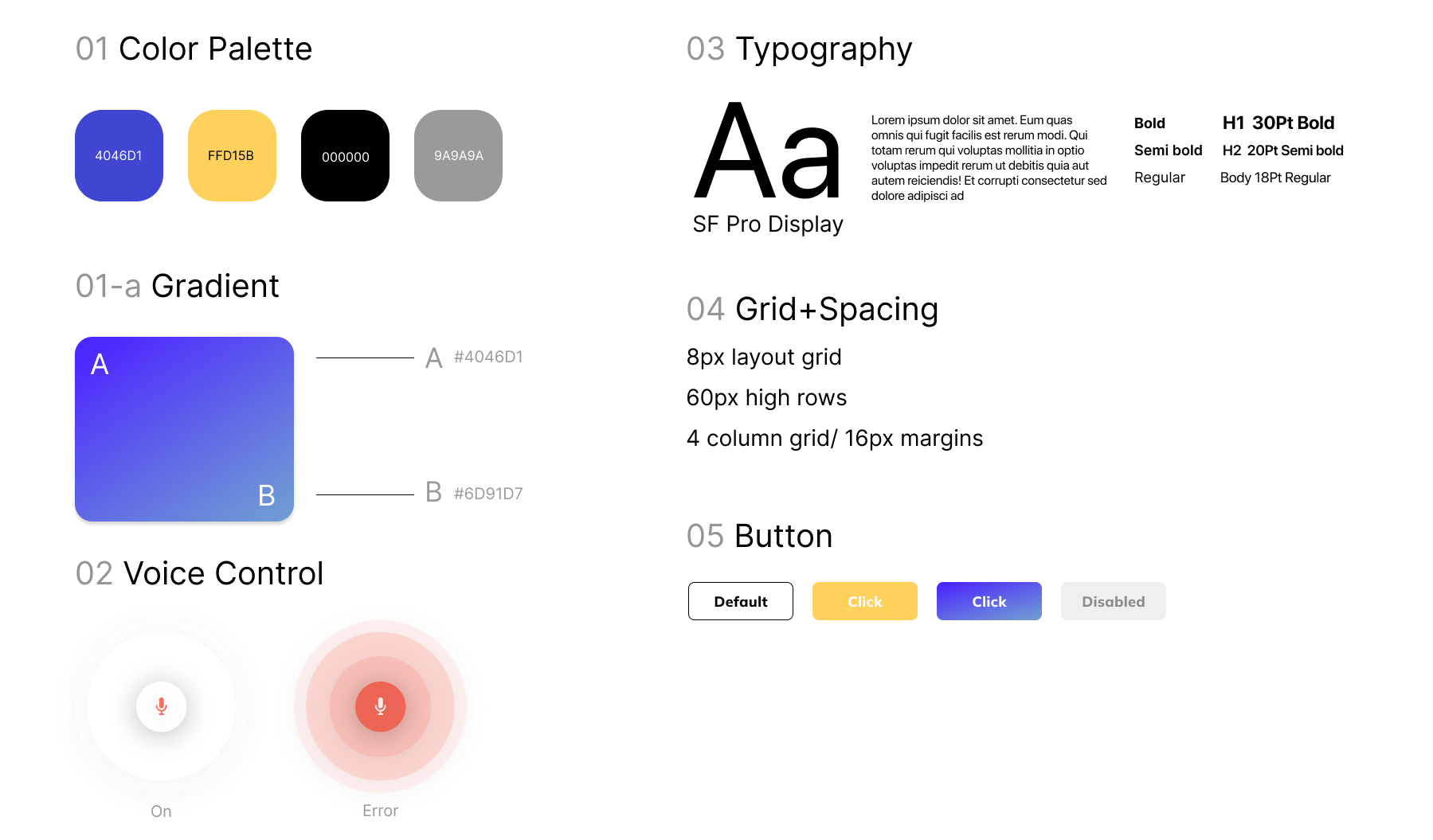
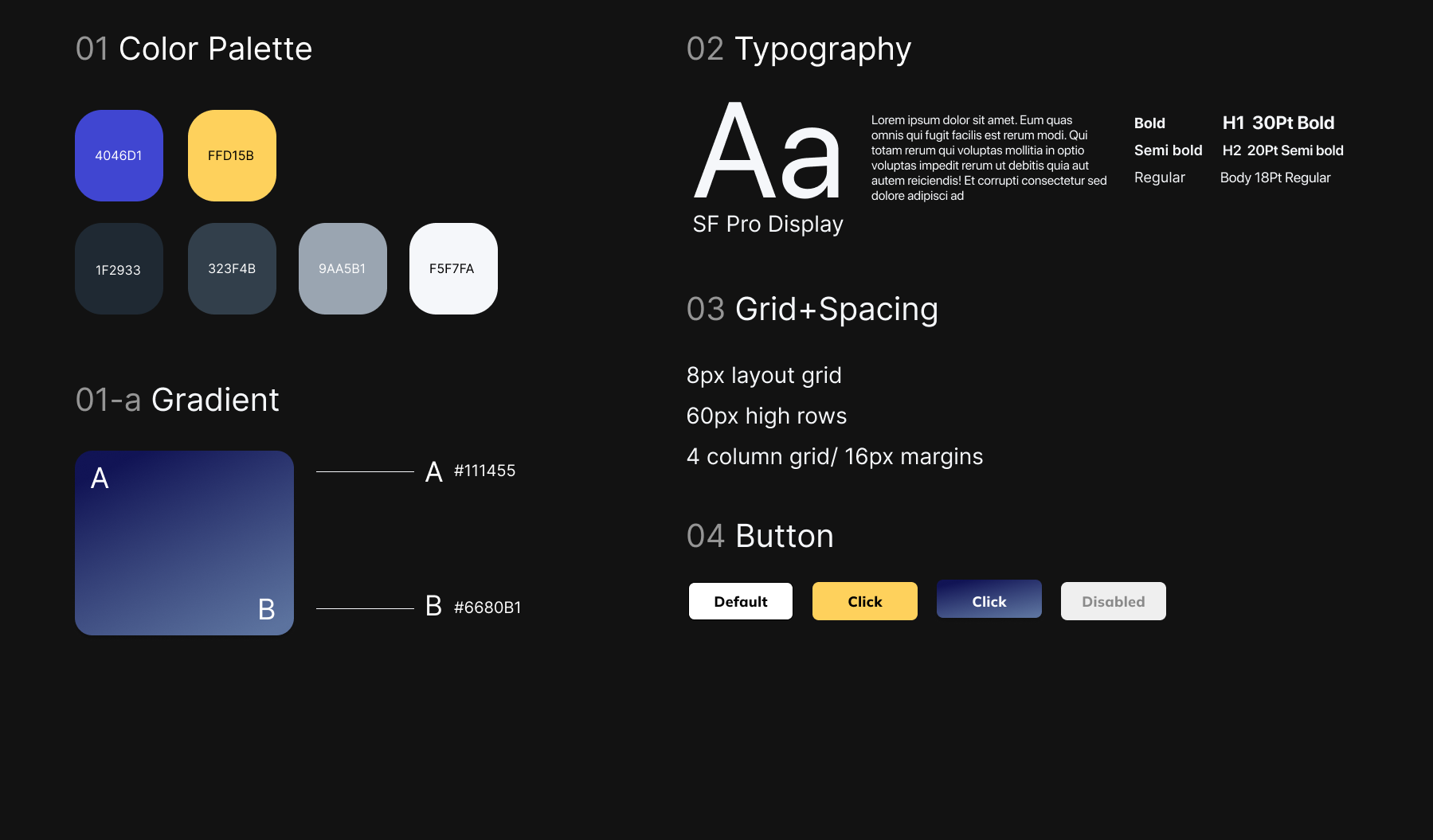
Night ModeFINAL PAGE
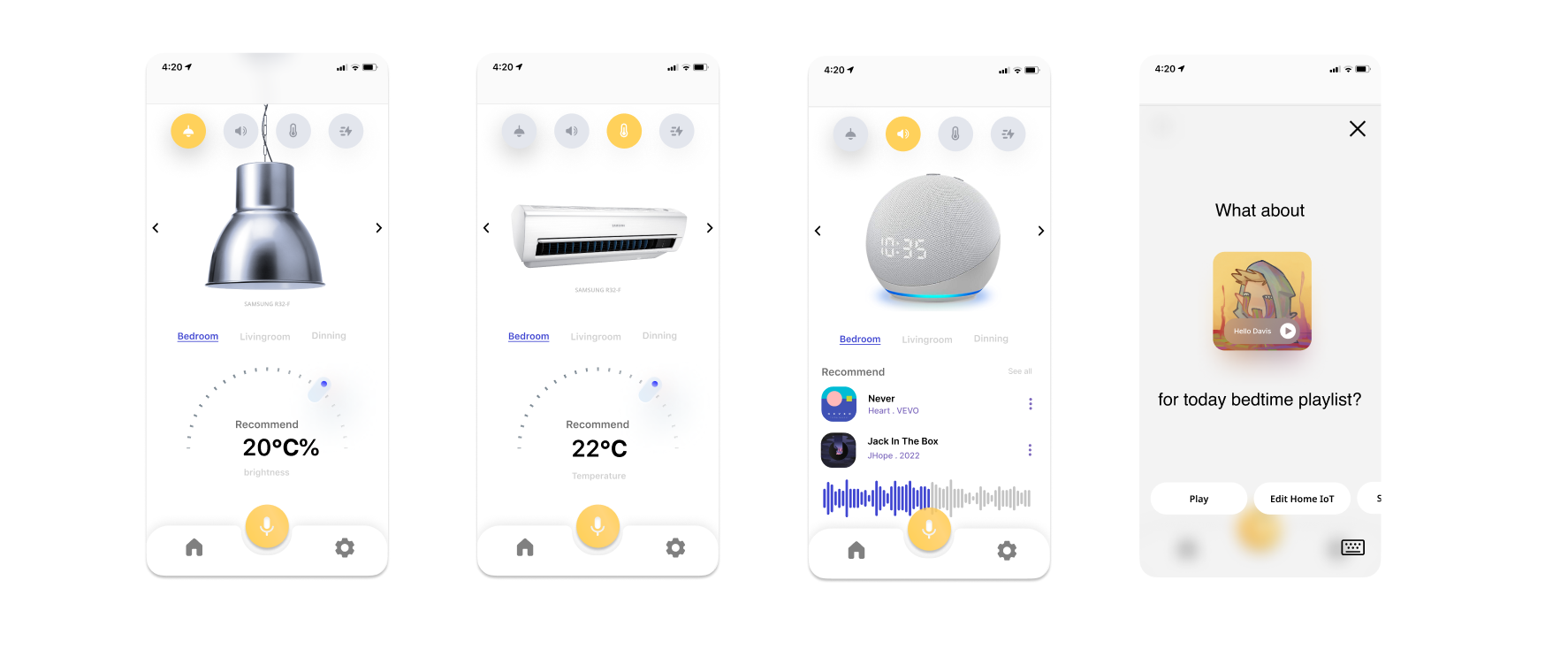
Home IoT screens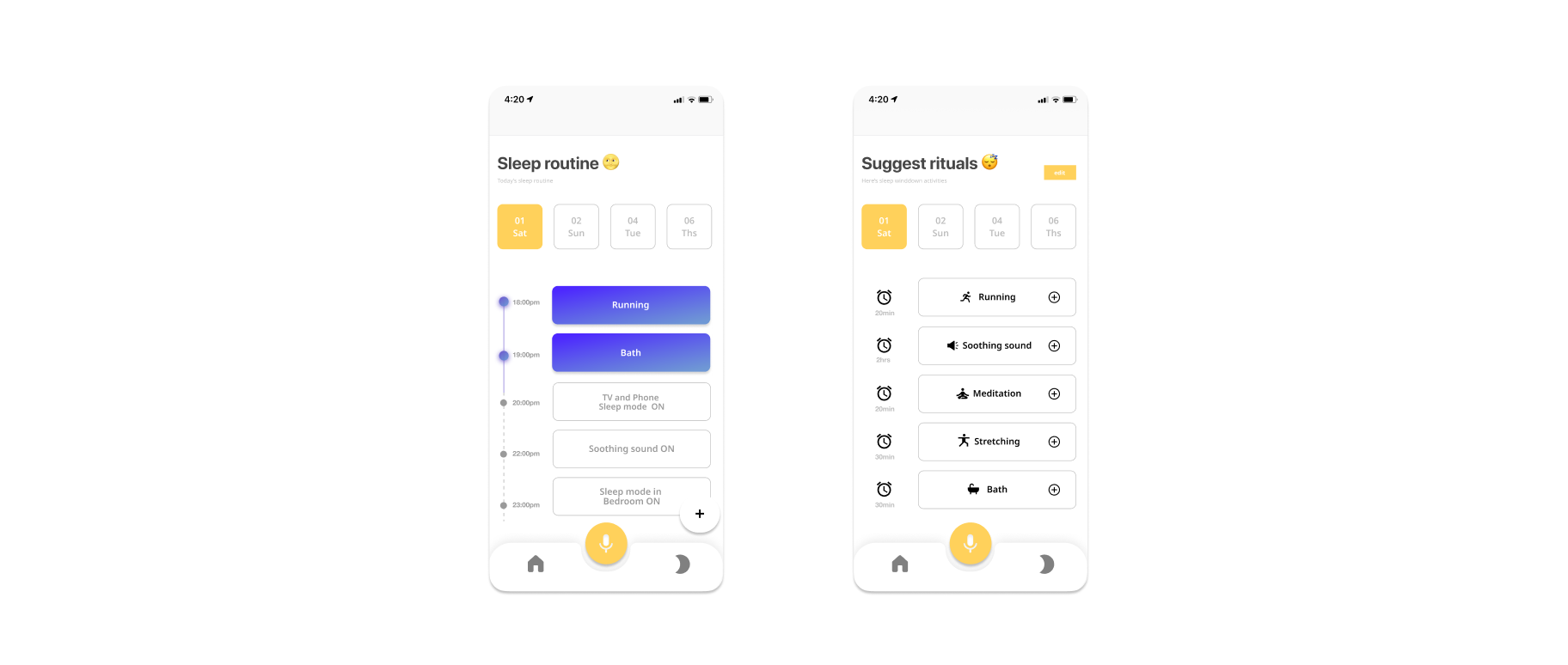
Sleep routine screens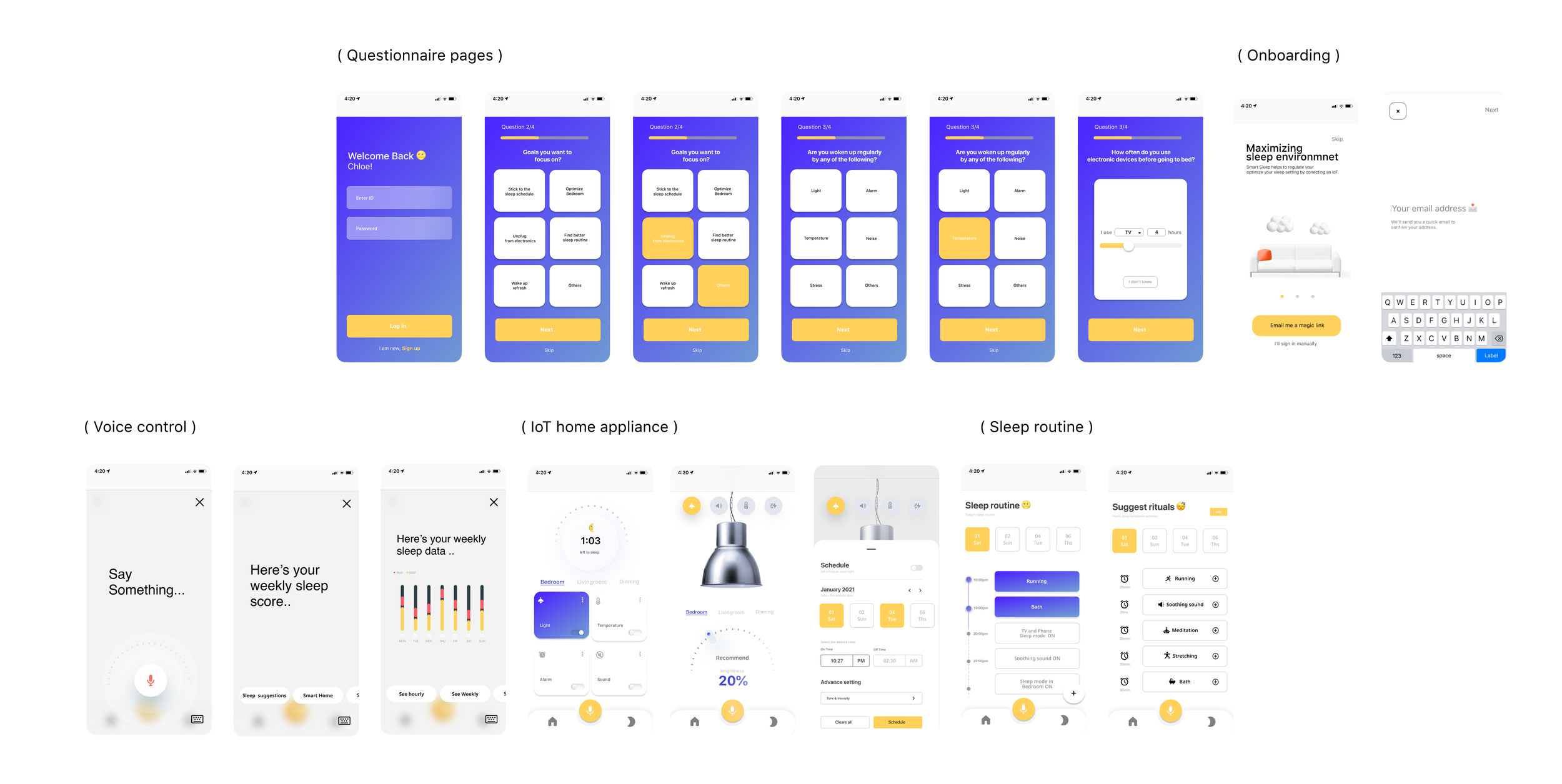
WHAT I LEARNED..
Iteration is the key to design success!
It was the first official UX project, and I am happy about the result so far. It was an exciting project as it provided real value, user research, and detailed interaction works. However, as I work solo, there are challenging to find out pain-points and opportunities. I researched where my design solution fits into the user's life, asking questions like 'What sleep means to you?' 'What do you use the phone on the bed?' Undertaking user research reveals design challenges. Through this project, I learned how to come up with good questions, avoid ending in yes/no responses, and take a broad view from the start.
I think reducing the smartphone usage by voice access commands feature isn’t persuasive so If I have a chance to improve this project, ideation should be iterated. I also find there isn't a perfect research method, especially on the first try. This project made me realize how much I love design (problem - solving) and how I won’t stop creating 🥰.